
When Dennis Potter wanted to write for Doctor Who

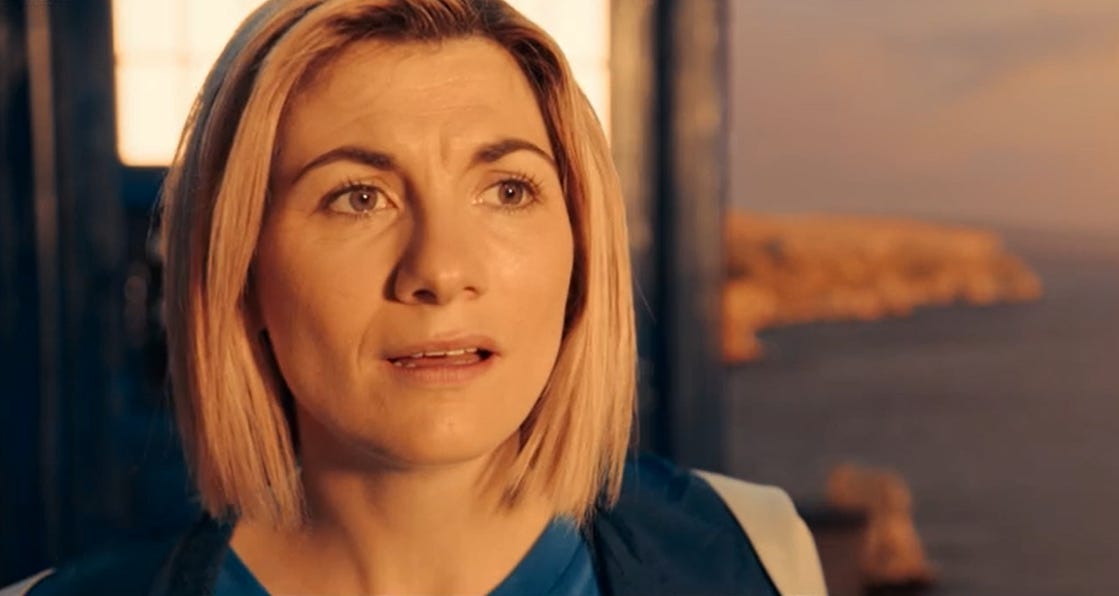
“Blossomiest blossom”, says Jodie Whittaker’s thirteenth Doctor moments before she regenerates in The Power of the Doctor. This snatch of dialogue references a famous remark by Dennis Potter from his final interview in 1994, when he was terminally ill.
Finding his perceptions heightened in the knowledge of his impending death, he recalled the blossom seen from the window of his home as “the whitest, frothiest, blossomiest blossom that there ever could be”.[1] The reuse of the phrase by the thirteenth Doctor was her acknowledgement that she too had reached her end.
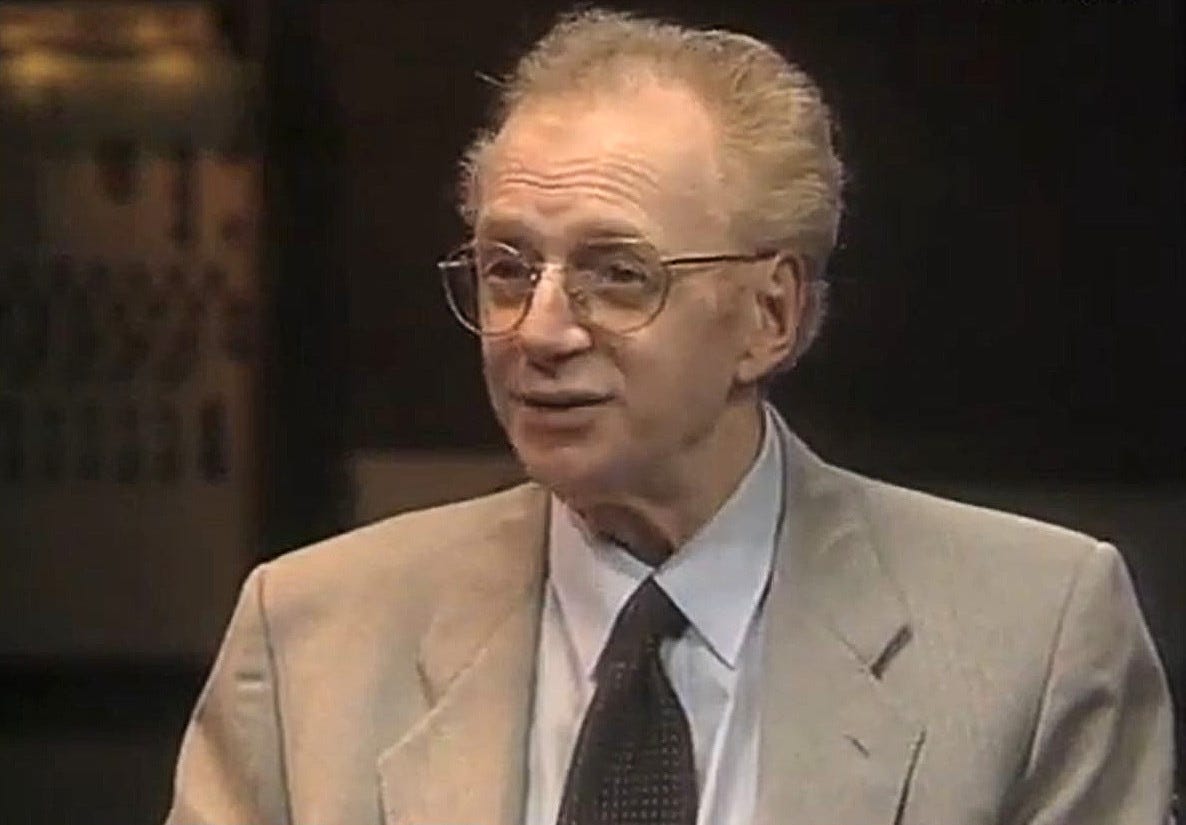
For the uninitiated, Dennis Potter was a writer widely regarded as one of the greatest dramatists to ever work in British television. From 1965 until his death he produced a string of single dramas and serials of unusual thematic depth and formal innovation, including Son of Man (1969), Pennies from Heaven (1978) and the controversial Brimstone and Treacle (made in 1976 but banned until 1987).
By borrowing Potter’s phrase, The Power of the Doctor’s writer Chris Chibnall was paying tribute to one of the undisputed greats of television. But it was only the latest of several occasions that Dennis Potter and Doctor Who have crossed paths. In fact, in the series’ early days, Potter had hoped to write for Doctor Who. It’s an incident which has at times been exaggerated in fan retellings and given more weight than it really deserves. Let’s look at what very little we really know about it and see what else we can reasonably infer.
Interviewed by Ginny Dougary for The Times in 1992, Potter revealed that Doctor Who’s first producer Verity Lambert had rejected his story. This must have occurred between the series’ debut in November 1963 and Lambert leaving the show in late 1965. This was also the time that Potter was starting out as a television dramatist. His first television play, The Confidence Course, was seen in the BBC’s contemporary drama strand The Wednesday Play in February 1965. Many more such plays would follow in quick succession.
Prior to achieving success as a writer for television, Potter was a writer about television, as the TV critic of the Daily Herald newspaper. In this capacity he stated that he would be watching Doctor Who with what he called “sympathetic interest” in a piece entitled ‘I Won’t Say No to Dr Who’ that was published on 30 November 1963, the day the series’ second episode was shown (along with a repeat of its first). It was presumably this interest that led to him trying his luck as a writer for the series.
Although the Times interview refers to Potter’s Doctor Who ‘script’ this word is not part of any direct quotations from Potter and his intended meaning was probably ‘storyline idea’. There is no indication that he actually wrote a script and nothing survives in either the BBC’s or Potter’s files to suggest his idea was even committed to paper in any respect.
As a television critic, Potter would have occasionally been invited to industry events and screenings, and quite possibly he informally approached Lambert at one such event. Or, given that illness often kept him at home at this time, he may simply have picked up the telephone and spoken to her, but in that scenario it seems more likely he would have spoken to the story editor (David Whitaker, Dennis Spooner or possibly Donald Tosh, depending on exactly when this occurred).
Asked by Dougary what his Doctor Who story was about, Potter’s initial response was not encouraging: “Oooh, I don’t know”. He expanded a little vaguely: “It was probably about a schizophrenic who only thought he was a time traveller.” That’s it. That’s all we’ve got to go on.
If Potter’s recollection was accurate (and, frankly, nothing in its phrasing is encouraging in that regard), it’s easy to see why Lambert was not receptive to the idea. It sounds more like the setup for a social drama, perhaps a Wednesday Play, than for an adventure with space monsters. It suggests a lack of familiarity with Doctor Who on Potter’s part. There may be an explanation for that, if we descend into the realms of (informed) speculation.
Potter’s article promoting Doctor Who doesn’t appear to have been informed by a viewing of the first episode despite it being published a week after the series started. I suspect the piece was written for publication on Saturday 23 November to promote the series’ debut but was held back a week due to the reorganisation of that day’s edition following the assassination of President Kennedy the previous day (Potter wrote in that edition about how the television schedules had responded to this news).
The Doctor Who press launch had been held on 21 November, with Verity Lambert in attendance. The Daily Herald would have been invited to send a journalist. Did Potter attend as their TV critic, leading to his piece promoting the series sight unseen (since there was no screening at the press launch)? If he did attend, he presumably heard a rough outline of the series only. With an eye on any chance to get into television writing, did he use this opportunity to put a spur-of-the-moment storyline idea to Lambert over a glass of complimentary white wine? Maybe, maybe not. But it fits what little we know of the incident.
Alternatively, we can still see how Potter’s idea may have come about if it actually arose nearer the other end of Lambert’s producership. In 1965’s The Time Meddler, the Doctor encounters a monk in 1066 Northumbria who turns out to be a time traveller (indeed, a member of his own people) in disguise. Potter’s idea could be a riff on this story, essentially inverting its premise.
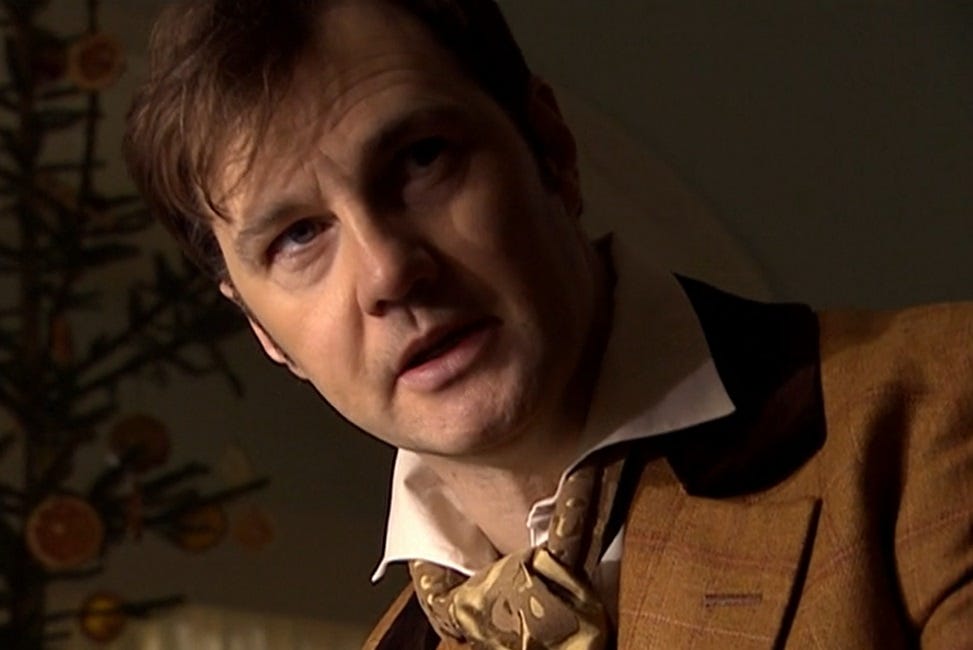
An echo of Potter’s idea resurfaced in Doctor Who long after his death. 2008’s The Next Doctor, by Russell T Davies, was based around the character of Jackson Lake (David Morrissey), a Victorian Gentleman who believes himself to be the Doctor. Although the minor similarity of this concept to Potter’s is intriguing, it is undoubtedly coincidental.
There is a danger here of taking Potter’s words too literally. His ‘probably’ qualifier suggests we should treat his anecdote with caution. I don’t doubt he once pitched to Lambert – there would be no reason for him to invent that – but the ‘probable’ subject of his pitch may be nonsense. Indeed, might Potter have been making an obscure joke? He was a master of manipulating genre and his work often explored the sometimes-uneasy division of reality and fantasy. His schizophrenic, deluded would-be time traveller idea is consistent with this but so wide of the mark as a plot driver for the Doctor Who of the 1960s that it may have simply been an off-the-cuff invention intended to amuse his interviewer and, perhaps, to imply that his only interest in writing for Doctor Who would be to subvert its generic premise. We’ll never know for sure.
After his rejection by Lambert, Potter’s career went from strength to strength. He never did write for an existing series format, preferring to plough his own furrow creatively. Even so, he clearly maintained a fondness for Doctor Who. He made occasional mentions of it in his journalism – including a cheeky suggestion in 1975 that politician Enoch Powell had an unearthly appearance that would suit him to a role in the series – and he nearly referenced it in one of his most notable productions, The Singing Detective (1986).
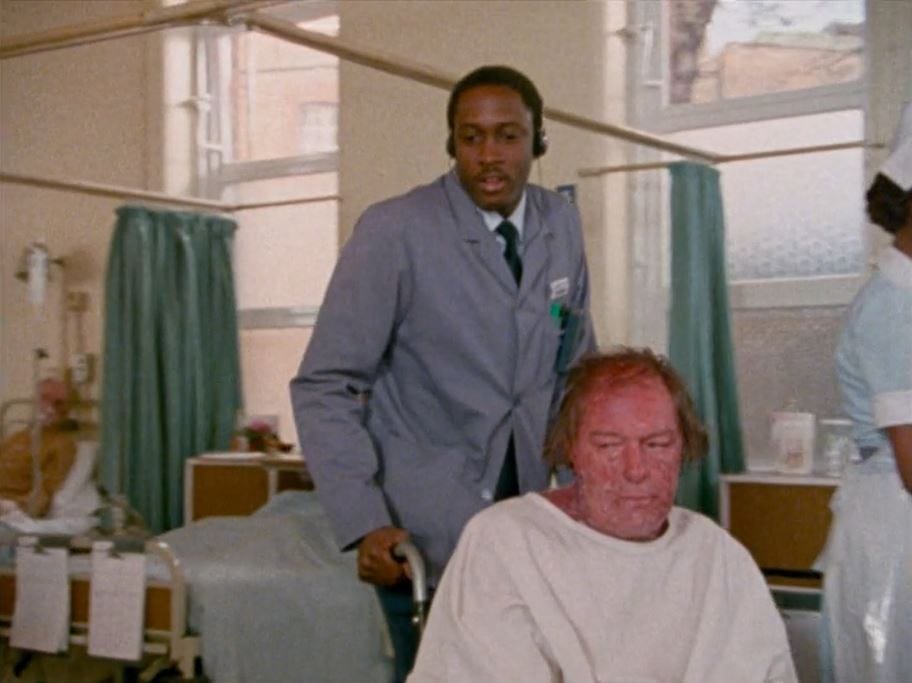
The Singing Detective featured Michael Gambon in the dual roles of hospitalised mystery novelist Philip E Marlow and his imagined private detective alter ego Philip Marlow. The narrative is punctured by fantasy and musical sequences. In his notes for an abortive earlier version, titled ‘The Last Television Play’, Potter had the main character (in this iteration Nigel Barton, the antihero of two of his Wednesday Plays) wheeled into the hospital ward to the accompaniment of the Doctor Who theme tune. In the final version he enters to a more sedate musical accompaniment consistent with the popular music of the 1930s and ‘40s used in the fantasy segments.
In his MacTaggart Lecture at the 1993 Edinburgh TV Festival, Potter delivered a blisteringattack on BBC management, memorably calling the Corporation’s Director General John Birt and its Chairman Marmaduke Hussey “a pair of croak-voiced Daleks”.
After Potter’s various allusions to Doctor Who across his professional connection with television, it was perhaps fitting that he would finally be quoted in the series itself. He may never have got to write for Doctor Who, but it used his words in the end.
Images © BBC except for the image of Potter himself which is © LWT or whoever owns their copyrights now (probably ITV Studios)
With thanks to Chris Arnsby, David Brunt and David Rolinson
No AI tools were used in the composition of this text
Sources
The Art of Invective – a collection of Potter’s journalism edited by Ian Greaves, David Rolinson and John Williams (Oberon Books, 2015)
Ginny Dougary’s interview with Dennis Potter, The Times, 26 September 1992
Dennis Potter interview by Melvyn Bragg for Channel 4 (available here) – the “blossomiest blossom” bit is at about seven minutes in
Dennis Potter’s 1993 MacTaggart Lecture, ‘Occupying Powers’ (available here) – the “croak-voiced Daleks” comment is at about 17 minutes in
Steven Morris’ 2023 Guardian article about ‘The Last Television Play’ (available here)
[1] It actually sounds more like he says “blossomest” but it’s usually transcribed as “blossomiest”, as used in Doctor Who.